
Confessions of a Former District Data Scientist: Why Most K–12 Programs Go Unevaluated

During the first day of the 2026 AI4MN Thought Leaders Summit, I heard something that seemed surprising to some but is common knowledge to me and my colleagues. Chris Agnew, Director of Stanford’s AI for Education Hub, shared two uncomfortable truths about the current state of K–12 education. First, education has very little high-quality causal […]
The Poverty of Usage Metrics: Why Logins Don’t Equal Learning
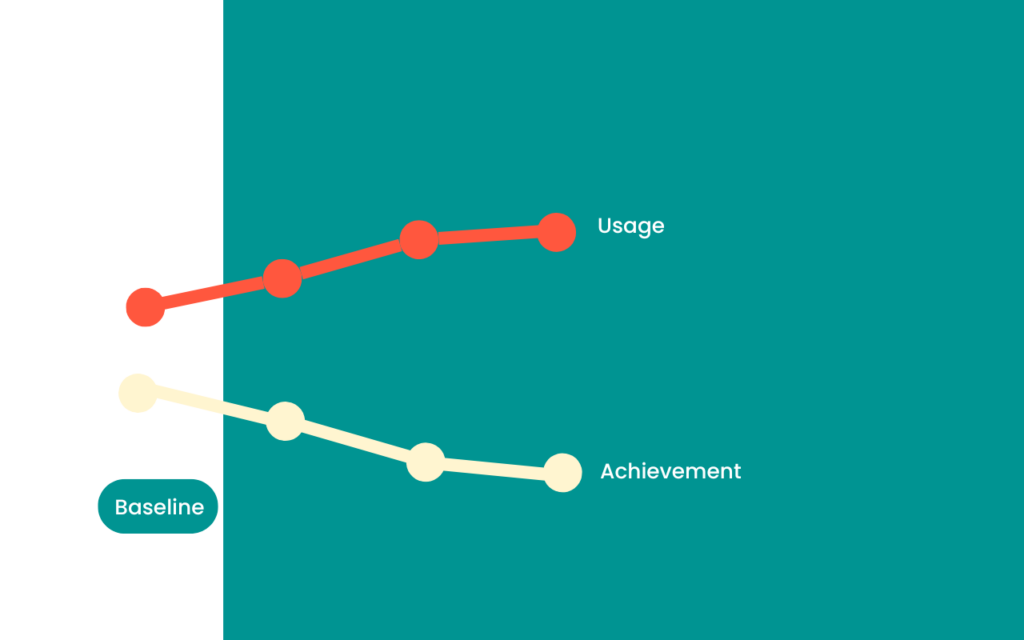
Several years ago, I worked with a school district that wanted to answer what seemed like a straightforward question. Was an expensive elementary math software program actually helping students learn? The product had been adopted across multiple elementary schools and had been in use for several years. Teachers were assigning it regularly, students were logging […]
Simple Steps to Get Started with Impact Measurement Today

Many youth-serving nonprofits want stronger evidence of impact, but getting started can feel overwhelming. Your team may know funders want more than stories. You may know district partners want clearer evidence of impact on student outcome. You may know your board would love stronger proof that the program is working. But between running daily programming, […]
The Power of Iteration: Using Rapid-Cycle Evaluation for Continuous Improvement

For many youth-serving nonprofits, program evaluation can feel like a final exam. Your team works hard all year. Students show up. Staff members adapt, encourage, troubleshoot, and serve. Then, at the end of the year, an evaluator reviews the results and tells you what happened after the school year is already over. That kind of […]
Demonstrating Impact for Grant Applications: How Nonprofits Can Prove What Funders Need to See

Youth-serving nonprofits know how to tell powerful stories. They can describe the student who finally started reading with confidence. The middle schooler who found a safe place after school. The high school senior who stayed on track because one adult kept showing up. These stories matter. They remind funders, boards, and communities that real students […]
The Budget Cut Shield: How to Use Objective Data to Say “No” to Low-Impact Initiatives

For many district leaders, budget season has become an exercise in impossible choices. Federal pandemic relief funding has expired. Enrollment shifts continue to affect revenue projections. State funding priorities evolve. Operational costs rise. Staffing pressures remain. At the same time, expectations for student outcomes have not decreased. Superintendents, Chief Academic Officers, and Chief Financial Officers […]
The “Homegrown” Data Trap: Why Internal Assessments Might Be Holding Back Your Funding

Most youth-serving nonprofits do not create internal assessments because they are trying to cut corners. They create them because they care deeply about students and want practical ways to measure progress. A nonprofit providing tutoring services may build a literacy rubric to track reading growth. A mentoring program may use surveys to measure confidence and […]
How Minneapolis & Hopkins Nonprofits Can Escape the Evaluation Trap

Across Minneapolis and Hopkins, youth-serving nonprofits are doing some of the most important work in their communities. Some organizations help students improve literacy skills after school. Others provide mentoring, STEM enrichment, attendance support, college readiness programming, arts education, or tutoring. Many of these programs operate with small teams, limited budgets, and an enormous amount of […]
The EdTech “Trim”: How to Cut Your Budget Without Cutting Student Growth

District leaders across the country are facing a difficult balancing act. After years of rapid digital expansion, many school systems are now under pressure to consolidate tools, reduce spending, and prove program ROI in education more clearly than ever before. Budgets have tightened, pandemic-era funding has changed, and educational investments now face greater scrutiny from […]
What Is a “Minimal Detectable Effect” and Why Does It Matter?

You have seen the impact with your own eyes. Teachers are using the product. Students seem more engaged. District partners are telling you the program is making a difference. Your team has stories, usage data, testimonials, and real confidence in the work. Then the evaluation comes back and says there was “no statistically significant impact.” […]